Every NFL postseason produces a team that the public thinks it understands—but doesn’t. Heading into the biggest game of the season, narratives often misrepresent strengths, exaggerate flaws, and ignore context. This in-depth analysis explains why one contender is widely misunderstood, how perception diverges from reality, and which overlooked factors consistently decide championship-level NFL games.
Why the “Most Misunderstood Team” Is Almost Always Still Standing
Every NFL season follows a familiar script. As the league approaches its biggest game—whether a conference championship or the Super Bowl—the conversation narrows. Fans, analysts, and media outlets gravitate toward simplified explanations. Teams are boxed into identities that feel neat, repeatable, and easy to debate.
And yet, year after year, one of the teams playing on the biggest stage is framed as less legitimate than the others.
This team didn’t arrive by accident. It survived injuries, schedule swings, matchup traps, and playoff pressure. It beat elite opponents. It adjusted. It endured. But somehow, the dominant narrative still suggests it is overachieving, lucky, or limited.
That contradiction is not coincidence. It is the result of how football is discussed—not how it is played.
What “Misunderstood” Actually Means in the NFL
In the NFL context, misunderstood does not mean underrated in the traditional sense. It means evaluated through the wrong framework.
A misunderstood team is one whose:
- Wins are explained away
- Strengths are described as gimmicks
- Weaknesses are magnified beyond proportion
- Identity is framed as a limitation rather than a design
These teams are rarely ignored. They are talked about constantly—but inaccurately.
Misunderstanding happens when analysis relies on:
- Highlight culture instead of situational football
- Fantasy football logic instead of playoff logic
- Early-season impressions instead of current form
- Style preferences instead of effectiveness
The biggest NFL games expose these errors more clearly than any other moment.
Why Public Narratives Freeze Right Before the Biggest Game
One of the most fascinating dynamics in sports discourse is how opinions stop evolving just when they should sharpen.
As the NFL reaches its final stage:
- Fans stop updating beliefs
- Analysts repeat conclusions instead of re-examining them
- Media narratives harden into “truths”
This happens because of three psychological forces.
Confirmation Bias
People seek evidence that supports what they already believe about a team. New information is filtered to fit old conclusions.
Narrative Fatigue
Once a storyline has been told all season, it becomes easier to repeat than to challenge.
Outcome Anchoring
Previous postseason losses are treated as permanent identity markers rather than contextual events.
This is why the most misunderstood team often looks “obvious” to doubt—right before proving those doubts incomplete or wrong.
A Modern Example of a Perpetually Misunderstood Contender
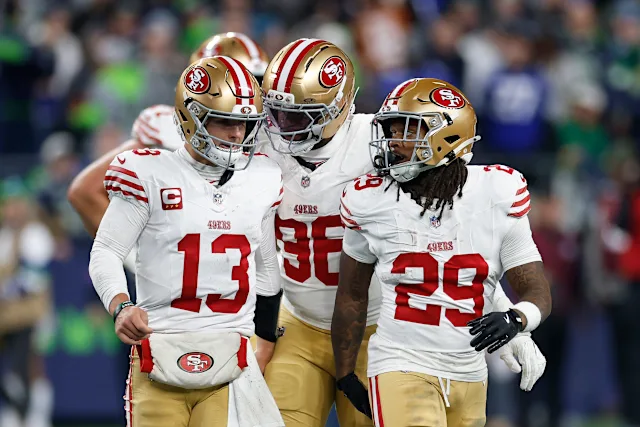
To ground this discussion, consider a modern contender like the San Francisco 49ers.
Across multiple seasons, this team has been described as:
- “A system offense”
- “Carried by defense”
- “Dependent on yards after catch”
- “Limited when playing from behind”
- “Not built for shootouts”
And yet, this same team consistently reaches the deepest stages of the postseason.
This is the archetype of misunderstanding: a team that keeps winning while the explanation for why keeps missing the point.
Misunderstanding #1: Confusing Style With Ceiling
One of the most persistent analytical errors in NFL discourse is assuming that how a team wins determines how far it can go.
Teams that emphasize:
- Ball control
- Defensive consistency
- Efficiency over explosiveness
are often framed as capped or conservative.
But the biggest NFL games rarely reward volatility. They reward control.
In championship environments:
- Possessions are limited
- Mistakes are amplified
- Momentum swings are violent
Teams that can shorten games, protect the football, and force opponents to earn every yard often outperform flashier teams under pressure.
Style is not a ceiling. Execution is.
Misunderstanding #2: Overrating “Star Dependency”
Another common critique of misunderstood teams is that they rely too heavily on one unit or one phase of the game.
You’ll hear phrases like:
- “If the defense slips, they’re done”
- “If the run game stalls, they have no answers”
- “If the quarterback has an off night, they can’t win”
This logic misunderstands how elite teams are constructed.
Balanced teams are not built because they lack stars. They are built because redundancy wins championships.
What Balanced Teams Do Better
- Absorb injuries without collapsing
- Adjust weekly without reinventing identity
- Win in multiple ways
- Avoid catastrophic failure
Dependency narratives usually come from fantasy football thinking, not postseason football reality.
Misunderstanding #3: Treating Close Wins as Red Flags
Few things hurt public perception more than close wins.
When a popular, star-driven team wins a close game, it’s called grit or resilience.
When a quieter, system-driven team wins a close game, it’s called luck.
But close games are the rule—not the exception—at the highest levels of the NFL.
In the biggest games:
- Talent gaps shrink
- Preparation equalizes
- Execution on a handful of plays decides outcomes
Teams that consistently win close games demonstrate:
- Situational discipline
- Emotional control
- Coaching clarity
- Trust in structure
Those traits matter more than blowout potential when margins disappear.
Misunderstanding #4: Outdated Quarterback Evaluation
Quarterbacks on misunderstood teams are often evaluated through the wrong lens.
If a quarterback is not:
- Leading the league in passing yards
- Producing weekly highlight throws
- Carrying the offense statistically
they are labeled as limited or replaceable.
But postseason quarterbacking is not about volume. It is about:
- Pre-snap recognition
- Third-down decisions
- Turnover avoidance
- Clock and score management
Many of the most successful postseason quarterbacks win games quietly. They do not dominate the broadcast—they dominate the situation.
The mistake is confusing spectacle with control.
Why the Biggest NFL Games Punish Narrative-Based Analysis
As the stage grows, football simplifies.
In championship environments:
- Crowd noise intensifies
- Weather often intrudes
- Officials allow more contact
- Emotional swings accelerate
These conditions favor teams that:
- Communicate cleanly
- Stay within structure
- Trust coaching
- Execute fundamentals under stress
Misunderstood teams often excel here because they were built for constraint—not chaos.
The Coaching Factor Casual Fans Consistently Miss
One of the most underrated advantages heading into the biggest NFL game is coaching continuity.
Misunderstood teams often feature:
- Stable coaching staffs
- Clear identity across seasons
- Consistent preparation habits
These teams do not panic. They adjust.
Coaching Edges That Don’t Show in Box Scores
- Play sequencing
- Halftime recalibration
- Clock discipline
- Red-zone decision-making
When talent is close, coaching details separate winners from runners-up.
How Media Framing Creates “False Underdogs”
Even when oddsmakers see two evenly matched teams, media framing often creates a psychological underdog.
This happens when:
- One team has a louder superstar
- One team fits a familiar championship archetype
- One team has a recent viral moment
The other team becomes the “surprise,” even if their résumé is equally strong.
Misunderstood teams often enter the biggest game with less respect than their performance justifies.
Why Defense-Forward Teams Are Still Misread in Modern Football
Despite years of evidence, defense-forward teams are still framed as outdated.
But in the biggest NFL games:
- Defensive pressure shortens drives
- Coverage discipline limits explosives
- Field position compounds
Defense does not win alone—but it sets the terms of engagement.
Teams that force opponents into long drives and repeated third downs often dictate the rhythm of championship games.
Misunderstanding #5: Ignoring How Teams Evolve Late in the Season
Another reason teams are misunderstood is static evaluation.
Fans often judge teams based on:
- September performance
- Midseason slumps
- Early matchups
Elite teams evolve.
By the time the biggest game arrives:
- Playbooks are refined
- Tendencies are self-scouted
- Weaknesses are minimized
The team on the field is not the team people remember from October.
What Smart Observers Look for Instead of Narratives
Experienced analysts focus on boring details that decide big games.
They track:
- Third-down efficiency
- Red-zone defense
- Turnover avoidance
- End-of-half execution
- Response after adversity
These traits rarely trend on social media—but they decide championships.
Why Misunderstood Teams Often Outperform Expectations
When perception lags reality, performance looks surprising even when it isn’t.
Misunderstood teams benefit from:
- Lower external pressure
- Clear internal identity
- Undervalued consistency
- Opponents buying into narratives
This combination creates opportunity when stakes are highest.
Key Signs You’re Watching a Misunderstood Team
- Their wins are explained away
- Their losses are magnified
- Their quarterback is “fine, not great”
- Their coach is “solid, not elite”
- Their style is labeled “limited”
And yet, they keep advancing.
What NFL History Teaches Us About the Biggest Games
Looking back at championship games across decades reveals a consistent pattern.
The team described as:
- “More complete”
- “More disciplined”
- “Better coached”
- “Less flashy”
wins more often than hype suggests.
History does not reward narrative. It rewards preparation.
Practical Takeaways for Fans and Analysts
- Don’t confuse excitement with effectiveness
- Evaluate teams as they are now, not as they were
- Respect balance over brilliance
- Focus on situational mastery
- Question consensus narratives
The biggest NFL games are rarely won by the loudest story.
Frequently Asked Questions (FAQ)
1. What makes a team “misunderstood” heading into a big NFL game?
When public perception lags behind on-field reality due to outdated narratives or stylistic bias.
2. Are misunderstood teams usually underdogs?
Not always by betting lines, but often in media framing and fan sentiment.
3. Why do balanced teams get less credit than star-driven teams?
Because balance is harder to market and easier to overlook.
4. Do quarterbacks on misunderstood teams get underrated?
Yes. Efficiency and control are often misread as limitations.
5. Why do close wins hurt perception?
Because fans equate dominance with blowouts, even though postseason games are usually tight.
6. Is defense still important in modern NFL championship games?
Absolutely. Defense sets pace, limits volatility, and creates margin.
7. Why do narratives harden before the biggest game?
Because confirmation bias replaces ongoing evaluation late in the season.
8. Can misunderstood teams win the Super Bowl?
History shows they often do—or come very close.
9. What’s the biggest mistake fans make analyzing championship matchups?
Relying on season-long stats instead of situational performance.
10. How can fans better evaluate teams in big games?
By focusing on process, not perception—how teams win, not how they look.
Final Thought
The most misunderstood team heading into the biggest NFL game is rarely the weakest. More often, it is the team that refuses to fit a simple story. Football at its highest level rewards discipline, balance, and clarity—not hype. When the lights are brightest, misunderstanding becomes opportunity, and quiet strengths become decisive.