Long before today’s pass-heavy, offense-driven NFL, one dominant defensive player forced the league to rewrite its rules. His physical style of coverage was so overwhelming that it reshaped how receivers run routes, how quarterbacks throw, and how defenses are allowed to play. This is the story of how one largely forgotten player permanently changed modern NFL football.
Introduction: The NFL Revolution Nobody Talks About
When fans debate the most influential figures in the history of the National Football League, the spotlight almost always lands on quarterbacks. Names associated with Super Bowls, MVP trophies, and highlight reels dominate social media and sports television.
But the NFL you watch today—the spread formations, quick slants, timing-based offenses, and strict defensive rules—did not evolve naturally. It was forced into existence.
The catalyst was not an offensive innovator, a record-breaking quarterback, or a genius play-caller. It was a defensive back whose dominance made the league uncomfortable.
His name was Mel Blount.
To many modern fans, Blount is a footnote. To the NFL itself, he was a problem so severe that the league intervened. This article explores how one “forgotten” player changed professional football forever—and why nearly every modern offensive concept traces back to his influence.
What Did the NFL Look Like Before This Player Changed Everything?
To understand the magnitude of Blount’s impact, you must first understand the NFL landscape before the late 1970s.
Football at the time was:
- Defense-dominated
- Physically brutal
- Slow by modern standards
Passing offenses were secondary options. Completion percentages hovered around 50%. Wide receivers were not protected, and quarterbacks expected to be hit on nearly every drop-back.
Defensive backs could:
- Jam receivers anywhere on the field
- Grab, shove, and redirect routes
- Use intimidation as a legal tactic
This environment rewarded size, strength, and aggression—especially in the secondary.
Mel Blount was built perfectly for this era.
Who Was Mel Blount? A Player the League Couldn’t Ignore
Drafted by the Pittsburgh Steelers in 1970, Mel Blount stood out immediately. At over six feet tall and more than 200 pounds, he was massive for a cornerback. More importantly, he was relentless.
Blount didn’t simply cover receivers—he erased them.
Receivers crossing his area of the field were:
- Knocked off timing routes
- Forced to reroute physically
- Mentally intimidated before the snap
Quarterbacks avoided throwing in his direction not because of interceptions alone, but because of the punishment receivers endured.
Blount played within the rules. That’s what made him dangerous.
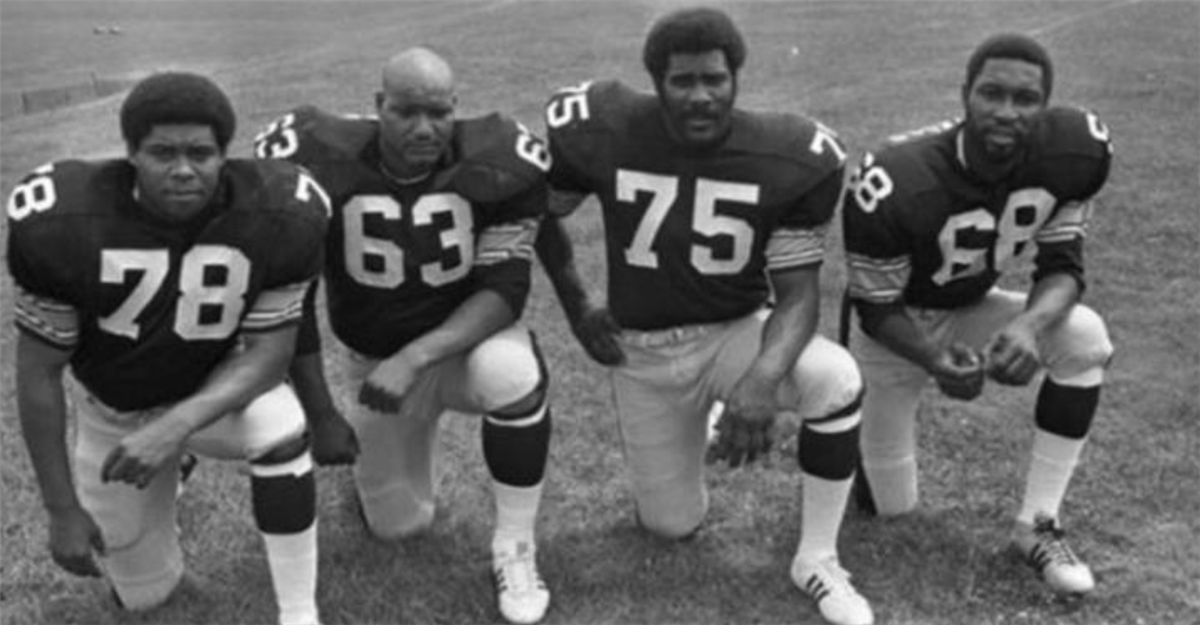
The Steel Curtain and Defensive Perfection
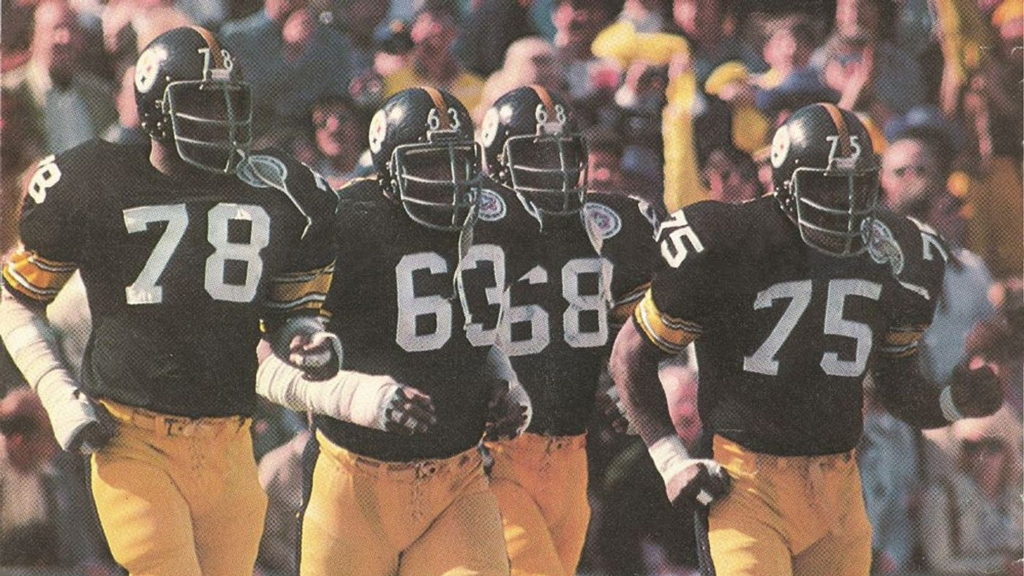
Blount was the cornerstone of the Steelers’ legendary “Steel Curtain” defense. While linemen clogged running lanes and linebackers punished ball carriers, Blount shut down the passing game entirely.
Opposing offensive coordinators struggled because:
- Routes couldn’t develop on time
- Receivers couldn’t reach landmarks
- Quarterbacks hesitated, disrupting rhythm
The Steelers didn’t just win games—they dictated how games were played.
When Dominance Becomes a League-Wide Problem
By the mid-1970s, the NFL faced a dilemma. Defenses—led symbolically by players like Blount—were choking offensive creativity. Scoring stagnated. Passing numbers fell. Television executives worried about entertainment value.
The solution was radical.
In 1978, the NFL introduced a rule limiting defensive contact with receivers beyond five yards from the line of scrimmage. Defensive backs could no longer grab, bump, or ride receivers downfield.
The change became informally known as “The Mel Blount Rule.”
It wasn’t named that way officially—but everyone knew why it existed.
Why the “Mel Blount Rule” Changed the NFL Forever
This single rule adjustment reshaped professional football more than any other decision in league history.
Immediately after the change:
- Passing yardage increased
- Completion percentages rose
- Timing-based offenses flourished
Within a decade, the NFL transitioned from a run-first league to a pass-centric spectacle.
The modern NFL was born not because offense evolved—but because defense was restrained.
How Today’s Passing Game Traces Back to One Defender
Every quick slant, mesh concept, option route, and spread formation depends on one thing: receivers must run freely beyond five yards.
Without that freedom:
- Timing routes collapse
- Spacing disappears
- Quarterbacks hesitate
Mel Blount proved that if defenders were unrestricted, passing offenses would never thrive.
Ironically, the NFL honored his greatness by ensuring no one could ever dominate like him again.
Why Mel Blount Became a Forgotten Name
Despite Hall of Fame induction, Blount faded from mainstream conversation for several reasons:
- Defensive players receive fewer highlights
- Younger fans never saw pre-1978 football
- Rule changes benefited offenses, not defenders
Modern fans often ask, Why can’t cornerbacks play physical anymore?
The answer is simple: because one once did—and it almost broke the league.
Comparing Eras: Before and After the Rule Change
Before 1978
- Receivers fought through contact
- Passing relied on broken plays
- Defensive intimidation defined strategy
After 1978
- Precision replaced punishment
- Passing records exploded
- Quarterbacks became league icons
The shift wasn’t about talent. It was about structure.
How Coaches and Coordinators Adapted
Once physical coverage was limited, coaches reimagined offense:
- Short, quick routes replaced deep isolation plays
- Slot receivers gained importance
- Motion and spacing became essential
Entire offensive philosophies—like the West Coast offense—became viable because defenders could no longer bully receivers.
Why This Story Still Matters to Fans Today
If you enjoy:
- High-scoring games
- Star quarterbacks
- Record-breaking receivers
You are watching a league shaped by Mel Blount.
His influence is invisible—but everywhere.
Ongoing Fan Debates Tied to This Change
Modern fans often complain that the NFL is:
- Too offense-friendly
- Over-regulated
- Less physical
Those debates exist because the league chose entertainment and balance after Blount forced their hand.
Practical Takeaways: Understanding Modern NFL Football
- Rule changes follow extreme dominance
- Defense once controlled the league
- Offensive explosions were engineered, not accidental
Knowing this history makes today’s game clearer.
Frequently Asked Questions (SEO-Optimized)
1. Who is the NFL player that changed the rules?
Mel Blount directly influenced the 1978 illegal contact rule.
2. What is the Mel Blount Rule?
It limits defensive contact with receivers beyond five yards.
3. Why did the NFL change coverage rules?
To increase scoring and offensive creativity.
4. Was Mel Blount really that dominant?
Yes—he disrupted entire passing systems legally.
5. Did this rule hurt defenses?
It permanently shifted balance toward offenses.
6. Why can’t cornerbacks play physically today?
Modern rules restrict contact to protect receivers.
7. Did passing stats rise after 1978?
Yes—dramatically across the league.
8. Is Mel Blount in the Hall of Fame?
Yes, inducted in 1989.
9. Do modern quarterbacks benefit from this rule?
Absolutely—timing and protection improved.
10. Has any other player forced rule changes like this?
Very few players have had such sweeping impact.
Final Thoughts: The Architect Football Forgot
Mel Blount didn’t change football by scoring touchdowns or setting records. He changed it by exposing a flaw in the system itself. His dominance forced the NFL to choose between defense and spectacle.
The league chose spectacle.
Every open receiver, every quick throw, every high-scoring Sunday exists because one defender once played the game too well. History may not always say his name—but the NFL still lives by his legacy every week.