The Pro Football Hall of Fame honors only a fraction of NFL greatness. Many elite players—statistical leaders, award winners, and era-defining stars—may never receive a gold jacket due to timing, positional bias, team success, or shortened peaks. This in-depth article explores why some outstanding NFL careers fall short of Canton, examines real-life examples, and answers the most common fan questions about Hall of Fame snubs.
Introduction: When Greatness Still Isn’t Enough
Every NFL fan remembers players who dominated Sundays, carried franchises, and defined entire eras of football. They were feared by opponents, respected by teammates, and celebrated by fans. Yet when Hall of Fame season arrives each year, many of these names remain absent from the final list.
The Pro Football Hall of Fame is not designed to celebrate most great players. It is designed to enshrine only the rarest of the rare. That reality creates an uncomfortable truth: some of the best players in NFL history may never make the Hall of Fame.
Fans ask these questions constantly:
- Why is this player not in the Hall of Fame?
- How can someone with those stats be left out?
- Is the Hall of Fame unfair to certain positions?
- Does winning a Super Bowl matter more than individual dominance?
- Are modern players judged more harshly than past legends?
This article takes a deep, honest look at those questions. It explains how the Hall of Fame process works, why deserving players are excluded, and highlights some of the greatest NFL careers that may never be officially immortalized—despite being unforgettable.
How the Pro Football Hall of Fame Selection Really Works
To understand why great players are excluded, you must first understand the system.
Each year, the Hall of Fame:
- Limits induction to five modern-era players
- Requires players to be retired for at least five years
- Uses a multi-stage voting process dominated by long-time media members
- Forces voters to compare players against each other, not against history
This structure alone guarantees that many elite players will never get in.
Key realities fans often overlook:
- Fewer than 1% of all NFL players ever reach the Hall
- Some positions are severely overcrowded (wide receiver, running back)
- Voters often prioritize championships and narrative moments
- Playing in the “wrong era” can hurt Hall chances
The Hall of Fame is not a reward for being great—it is a filter that eliminates nearly everyone.
Quarterbacks: Elite Careers That Still Fall Short
Why do so many great quarterbacks miss the Hall?
Because quarterback standards are brutal.
Modern fans compare quarterbacks not to league averages, but to the very best players who ever lived. Playing in the same era as multiple all-time legends can be a curse.
Philip Rivers
Philip Rivers retired among the top quarterbacks in passing yards and touchdowns in NFL history. For over a decade, he was the foundation of competitive teams and rarely missed a start.
Why his Hall of Fame case struggles:
- Zero Super Bowl appearances
- Limited playoff success
- Played in the same era as Brady, Manning, Brees, and Rodgers
Rivers was consistently excellent—but excellence alone may not be enough.
Tony Romo
Tony Romo’s legacy is complicated. Advanced metrics show he was one of the most efficient quarterbacks of his generation. His improvisation and football IQ elevated average rosters.
What worked against him:
- Injuries shortened his prime
- No deep playoff runs
- Played under relentless national scrutiny
Romo’s impact is undeniable, but Hall of Fame voters often value longevity and postseason success more than efficiency.
Running Backs: Short Peaks, Long Odds
Why are running backs so vulnerable to Hall exclusion?
Because the position burns out quickly.
Running backs often dominate early, absorb heavy punishment, and decline before reaching traditional longevity benchmarks. Modern committees and analytics have made long careers even rarer.
Jamaal Charles
At his peak, Jamaal Charles was nearly unstoppable. His career yards-per-carry average remains one of the highest in league history.
Why he may never make it:
- Short prime due to injuries
- Limited postseason exposure
- Career totals don’t match older Hall standards
Charles represents the Hall’s struggle to value efficiency and peak dominance over raw totals.
Shaun Alexander
Shaun Alexander won an MVP and once scored 28 touchdowns in a single season—an achievement few players in history can match.
What hurts his case:
- Steep decline after his peak
- Narrative crediting offensive line more than individual brilliance
- Short window of dominance
Despite historic production, Alexander’s Hall candidacy remains stalled.
Wide Receivers: The Most Brutal Logjam in Football
Why is it hardest for wide receivers to get in?
Because the position is overcrowded and statistics are inflated by era.
As passing numbers explode, voters raise the bar higher and higher.
Reggie Wayne
Reggie Wayne finished with over 14,000 receiving yards and was a cornerstone of elite offenses for years.
Why he’s still waiting:
- Played alongside another all-time great
- Fewer individual awards
- Quiet dominance rather than highlight-driven fame
Wayne’s career shows how consistency can be overshadowed by flash.
Chad Johnson
Chad Johnson was both productive and culturally influential. He redefined receiver personality while delivering elite production.
Challenges to his case:
- Shorter peak
- Limited playoff success
- Persona sometimes overshadowed performance
Johnson changed the league’s culture, but Hall voters tend to resist style-driven legacies.
Defensive Greats Who Might Never Be Fully Rewarded
Defense is essential—but it’s harder to quantify and market.
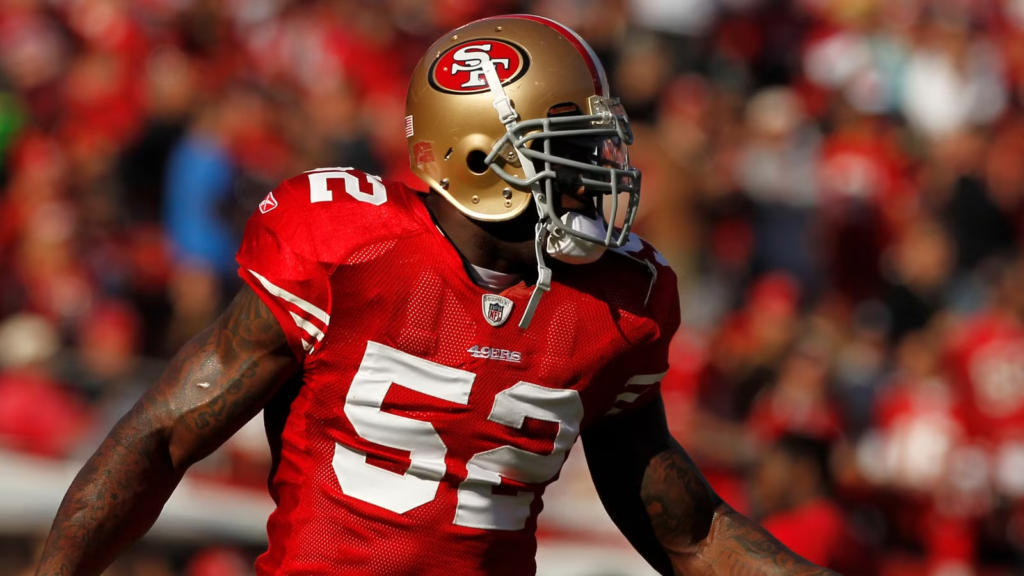
Patrick Willis
Patrick Willis was one of the most dominant linebackers of his era. When healthy, he was the centerpiece of elite defenses.
Why his case is complicated:
- Early retirement
- Shorter career counting stats
- Shared credit with stacked defensive rosters
Willis may eventually get in, but his wait highlights the Hall’s resistance to shortened brilliance.
London Fletcher
London Fletcher never missed a game in 16 seasons and recorded over 2,000 tackles.
Why he’s overlooked:
- Undrafted status
- Few flashy moments
- Played for multiple teams without a singular legacy narrative
Durability and leadership remain undervalued Hall traits.
Special Teams: The Hall’s Biggest Blind Spot
Why are special teams players ignored?
Because their impact is difficult to compare across eras.
Devin Hester
Devin Hester changed games without playing offense or defense. Teams altered strategy specifically because of him.
Why his case matters:
- No direct positional comparison
- Changed league-wide behavior
- Historic scoring impact
Hester’s Hall debate reflects how limited the Hall’s traditional framework can be.
Structural Reasons Great Players Miss the Hall
Beyond individual careers, several systemic issues shape outcomes:
- Era bias – modern players face inflated benchmarks
- Championship bias – rings outweigh individual dominance
- Narrative bias – media storytelling influences voting
- Positional bias – some roles are harder to justify statistically
The Hall of Fame doesn’t just measure greatness—it ranks it.
What Fans Often Get Wrong About the Hall of Fame
Common misconceptions include:
- Big stats guarantee induction
- Awards automatically settle debates
- Longevity always beats peak dominance
In reality, Hall voting is subjective and comparative. Two players with similar resumes can receive wildly different treatment based on timing and narrative.
Practical Takeaways for NFL Fans
To better understand Hall of Fame debates:
- Compare players to their era, not all-time legends
- Value peak dominance alongside longevity
- Recognize positional disadvantages
- Separate popularity from historical impact
Greatness does not require validation from Canton.
Frequently Asked Questions (FAQ)
1. Why do great NFL players miss the Hall of Fame?
Because the Hall is extremely selective and shaped by era, position, team success, and narrative.
2. Is the NFL Hall of Fame harder than other sports?
Yes. It inducts far fewer players relative to league size.
3. Do Super Bowls matter too much?
Often. Championships heavily influence perception.
4. Are wide receivers underrepresented?
Historically, yes.
5. Does early retirement hurt Hall chances?
Almost always, unless dominance was overwhelming.
6. Can players get inducted decades later?
Yes, but long waits usually signal difficulty.
7. Are defensive players overlooked?
Frequently, especially non-sack specialists.
8. Does personality affect voting?
More than voters admit.
9. Is the Hall of Fame fair?
It is consistent, but not always just.
10. Will standards change in the future?
Possibly—but very slowly.
Final Thoughts: Greatness Exists Beyond Canton
The Pro Football Hall of Fame tells only part of the NFL’s story.
For every player enshrined, dozens more shaped seasons, franchises, and fan memories without ever receiving official immortality. Their impact lives in highlights, rivalries, and the emotions they created on Sundays.
A gold jacket is not the definition of greatness.
Memory is.