This year’s Super Bowl betting lines are moving faster and more unpredictably than ever before, leaving fans confused and bettors anxious. The truth lies in a complex mix of public psychology, sharp money, betting algorithms, media narratives, and legalized sports betting at scale. This in-depth guide reveals how Super Bowl odds are really created, why they swing wildly, and how smart bettors can read the signals instead of chasing hype.
Introduction: Why Super Bowl Betting Feels Different This Year
Every year, the Super Bowl attracts massive attention from fans, advertisers, media outlets, and bettors. But this season, something feels noticeably different. Point spreads are shifting daily. Totals bounce up and down. Prop bets appear and disappear overnight. Social media is flooded with screenshots of odds changes, and fans are asking one burning question: why are this year’s Super Bowl betting lines so wild?
Search data shows Americans are typing questions like:
- Why did the Super Bowl line change overnight?
- Are sportsbooks manipulating Super Bowl odds?
- Who really controls betting lines?
These questions aren’t rooted in paranoia—they’re rooted in confusion. The modern betting market is faster, louder, and more psychological than ever before.
At the heart of it all sits the National Football League, whose championship—the Super Bowl—has become the single largest betting event in American sports history.
Understanding this year’s betting chaos requires pulling back the curtain on how the system actually works.
How Super Bowl Betting Lines Are Really Created
One of the biggest myths in sports betting is that oddsmakers are trying to predict the final score. They’re not.
Sportsbooks exist to manage risk, not forecast outcomes.
The process usually begins weeks before the Super Bowl with internal power ratings that factor in:
- Team efficiency metrics
- Offensive and defensive matchups
- Injury reports and depth charts
- Pace of play and scoring tendencies
- Historical Super Bowl behavior
From there, oddsmakers release an opening line. This number is intentionally imperfect. Its purpose is to invite action and test the market.
Once betting begins, the line stops being about football and starts being about money flow.
Why This Year’s Super Bowl Lines Are More Volatile Than Ever
Several unprecedented forces are colliding at once, creating the most chaotic betting environment Super Bowl bettors have ever seen.
1. Nationwide Sports Betting Legalization
With sports betting now legal in most U.S. states, millions of new bettors are entering the market—many for the Super Bowl only.
These bettors:
- Bet favorites
- Bet star quarterbacks
- Bet narratives they hear on TV
This massive wave of emotional money creates imbalance that sportsbooks must correct quickly.
2. Public Money vs Sharp Money Is Louder Than Ever
Super Bowl week is a battlefield between two forces.
Public money comes from casual fans betting small amounts in massive volume.
Sharp money comes from professionals betting large amounts with discipline and data.
Sportsbooks react very differently to each.
When sharp money hits:
- Lines move quickly
- Limits tighten
- Buyback opportunities emerge
When public money hits:
- Lines move slowly
- Books often let it pile up
- Value quietly shifts to the other side
This tug-of-war is far more intense during the Super Bowl than any other game.
Why the Opening Line Is Rarely the Best Line
Many casual bettors assume the opening line is the most “honest” number. In reality, it’s often the most strategic.
Oddsmakers anticipate:
- Which team casual fans will prefer
- Which star players attract money
- Which narratives media will push
As a result, opening lines are often shaded slightly toward public bias. That doesn’t mean sportsbooks are tricking bettors—it means they understand human behavior.
Media Narratives and the Illusion of Chaos
Modern sports media plays a massive role in betting volatility.
A single viral clip, analyst opinion, or injury rumor can spark:
- Sudden line movement
- Sharp overreactions
- Public betting frenzies
The key insight? Most media-driven line movement reflects perception, not probability.
Sportsbooks must still adjust because perception drives money—and money moves lines.
How Betting Apps and Algorithms Control the Speed of Movement
Today’s sportsbooks are powered by real-time data systems.
Major platforms like DraftKings and FanDuel track:
- Bet volume
- Bet size
- Timing patterns
- Geographic betting clusters
When certain thresholds are crossed, odds adjust automatically—sometimes within seconds. This speed creates the feeling of chaos, even when the system is functioning exactly as designed.
Why Super Bowl Prop Bets Are Especially Wild
No sporting event produces more prop bets than the Super Bowl.
This year alone, bettors are seeing:
- Hundreds of player props
- Novelty bets tied to game events
- Micro-props on drives, plays, and outcomes
Props are volatile because:
- Limits are lower
- Information is imperfect
- Public narratives dominate
A single tweet about a player’s role can dramatically shift odds within minutes.
Do Sportsbooks Want One Side to Win?
This is one of the most misunderstood topics in sports betting.
Sportsbooks do not care who wins the Super Bowl. They care about exposure.
That said, perfect balance is nearly impossible during the Super Bowl due to:
- Public bias
- Media hype
- Emotional betting
Sometimes sportsbooks will willingly take a position if they believe the public is wrong. That’s not manipulation—it’s confidence in their models.
Why Late Line Movement Confuses So Many Bettors
As kickoff approaches, betting behavior changes dramatically.
Late bettors tend to:
- Chase trends
- Follow social media picks
- Bet emotionally
This can create confusing scenarios where:
- Lines move against heavy public action
- Totals drop despite offensive hype
To professionals, these moves signal sharp influence. To casual bettors, they look suspicious.
The Psychology Behind Super Bowl Betting Mistakes
Super Bowl betting amplifies every cognitive bias.
Common mistakes include:
- Betting with fandom instead of logic
- Overvaluing recent performances
- Chasing line movement
- Spreading bankroll across too many props
Sportsbooks understand these behaviors and price lines accordingly.
Why This Year’s Lines Feel Tougher to Beat
Many experienced bettors agree: this year’s Super Bowl lines feel tighter.
That’s because:
- Models are more advanced
- Public behavior is well-mapped
- Market efficiency is higher
The edge for casual bettors has shrunk—but understanding line movement can still provide insight.
How Injury News Really Impacts Super Bowl Odds
Injuries matter, but injury news matters more.
Even vague reports can:
- Trigger early sharp action
- Move lines before confirmation
- Create buying opportunities later
Smart bettors watch how the market reacts, not just the news itself.
Are Super Bowl Betting Lines Manipulated?
Despite persistent rumors, there is no evidence of manipulation.
Lines move because:
- Money flows
- Risk shifts
- Information evolves
In fact, the transparency of modern betting markets makes manipulation extremely difficult.
How Professional Bettors Read the Market
Professionals don’t bet teams—they bet numbers.
They watch for:
- Reverse line movement
- Disproportionate shifts
- Timing of sharp money
A half-point move at the right moment often reveals more than hours of televised analysis.
What Casual Bettors Get Wrong About Value
Value is not about picking winners. It’s about beating the number.
Many bettors:
- Ignore timing
- Bet emotionally
- Chase steam
In Super Bowl betting, patience often beats passion.
Key Takeaways for Super Bowl Bettors
- Lines move because of money, not opinions
- Public narratives drive volatility
- Sharp money leaves subtle clues
- Props carry higher variance
- Psychology matters as much as statistics
Understanding these principles won’t guarantee wins—but it will prevent costly mistakes.
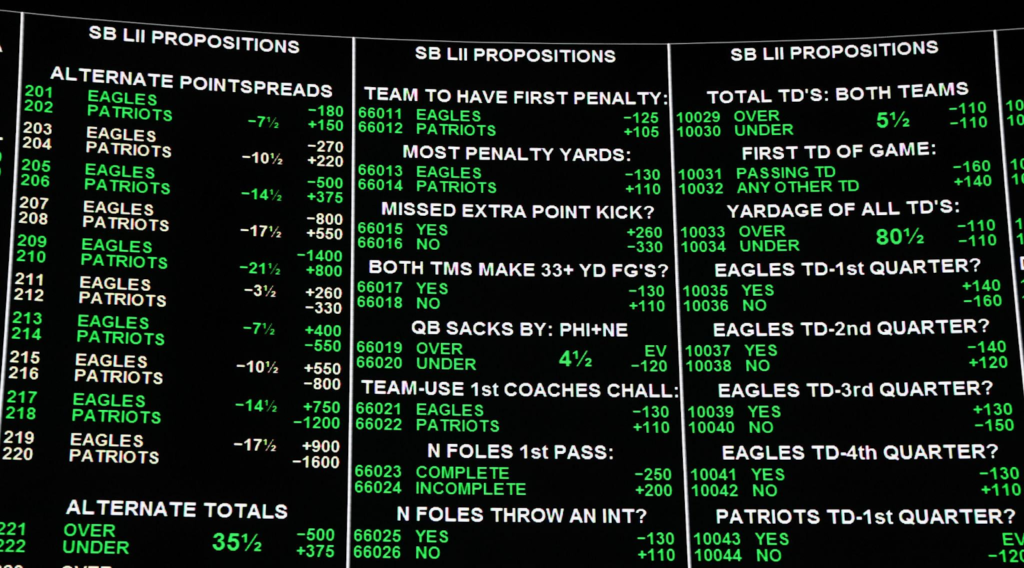
Top 10 Trending FAQs Americans Are Asking
1. Why are this year’s Super Bowl betting lines so volatile?
Because of legalized betting expansion, public bias, sharp money, and real-time algorithms.
2. Who sets Super Bowl betting lines?
Sportsbook oddsmakers using power ratings and market behavior.
3. Do sportsbooks manipulate Super Bowl odds?
No. Lines move based on money and risk management.
4. What is sharp money in Super Bowl betting?
Large, data-driven wagers from professional bettors.
5. Why do lines move against public betting?
Because sportsbooks respect sharp money more.
6. Are Super Bowl prop bets risky?
Yes. They are volatile and narrative-driven.
7. Does media hype affect betting odds?
Absolutely—especially close to kickoff.
8. When is the best time to bet the Super Bowl?
It depends on the market and timing, not predictions.
9. How do betting apps change odds so fast?
Through real-time algorithms tracking wager patterns.
10. Can understanding line movement help bettors?
Yes. Market awareness is critical.